Strength Training for Women Over 40
Build muscle, support bone health, and improve everyday strength with practical workouts designed for women in midlife. No fads, no bootcamps — just sensible training you can keep doing for years.
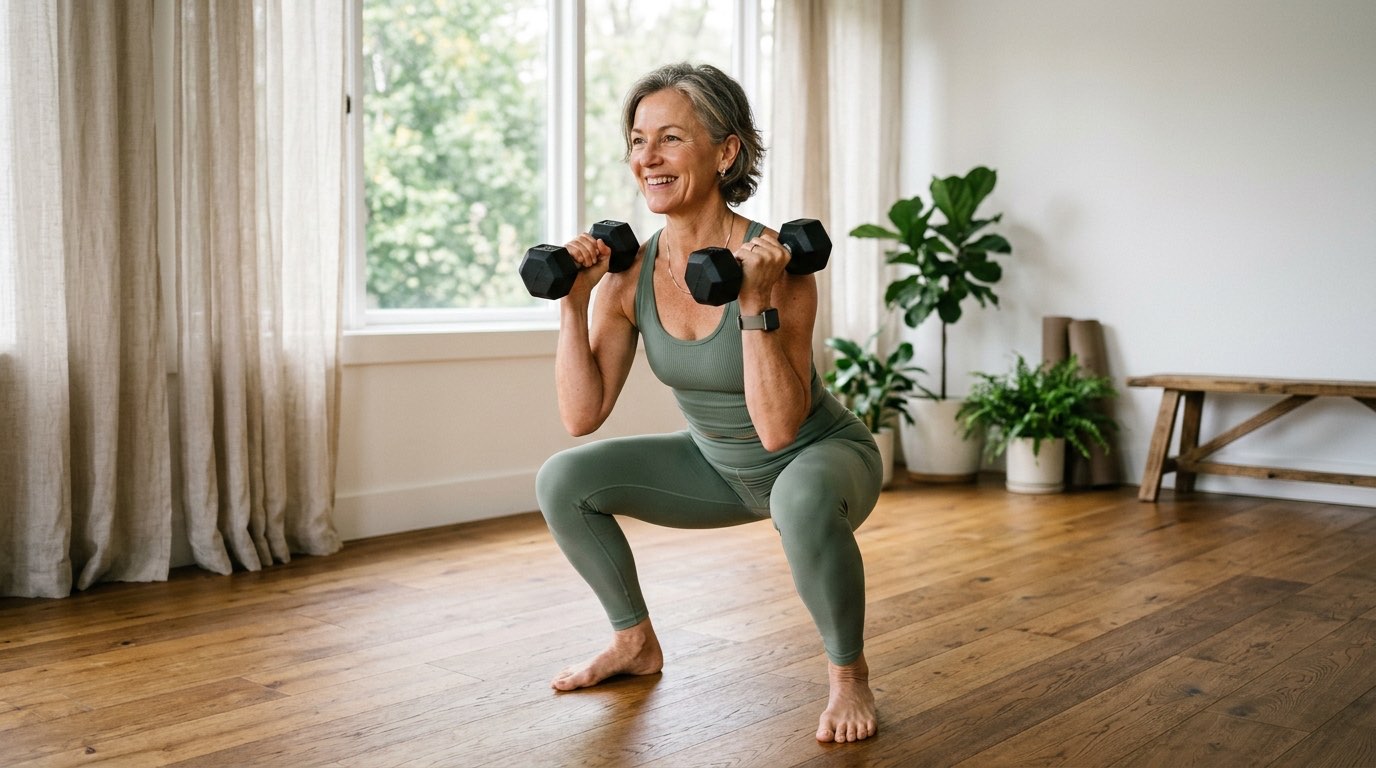
A controlled-depth squat variation with adjustable range and support options.
Why Strength Training Matters After 40
From around midlife, muscle mass and strength naturally decline — a process researchers call sarcopenia — and bone density tends to fall too, faster for women after menopause. Those trends are normal, and they are not a verdict: muscle and bone both respond to loading at any age.
That's why public health guidance — including the World Health Organization's — recommends that adults do muscle-strengthening activity on at least two days a week, alongside regular aerobic movement. Strength training is the most direct way to meet that recommendation, and its payoff is practical: getting out of chairs, carrying shopping, climbing stairs, and staying independent in the decades ahead.
Being straight with you: strength training is one of the best-supported health habits there is, but it isn't a guarantee against aging, injury, or illness. We keep the hype out and the evidence in.
Beginner Strength Training
Never lifted before, or returning after years away? Start with the five basic movement patterns — squat, hinge, push, pull, carry — two days a week, and progress only when the last rep feels controlled.
- A two-day starter week with exact exercises, sets, and reps
- How to pick your starting weight (and when to add more)
- What normal effort feels like versus pain
Dumbbell Workouts
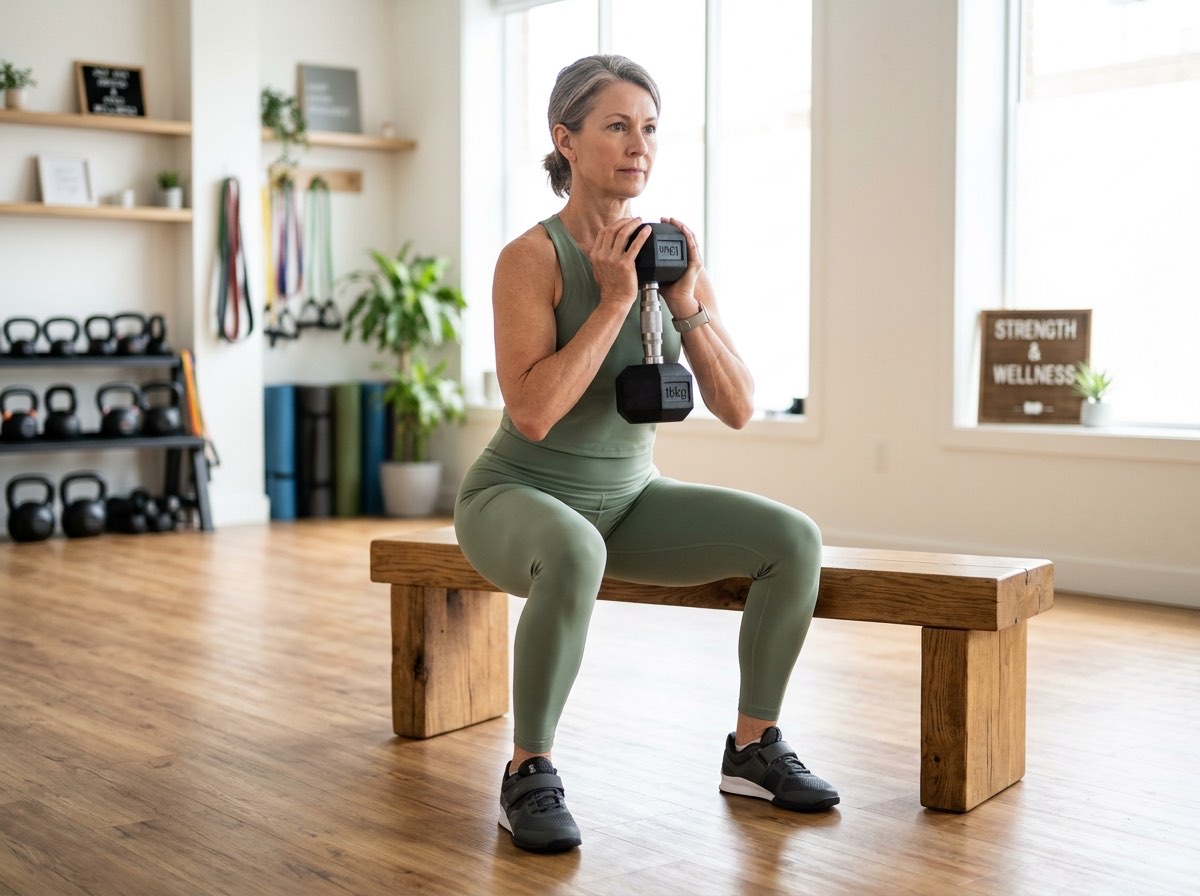
Three complete dumbbell sessions — full body, upper, and lower — with practical weight-selection guidance. Dumbbells are the most versatile home or gym tool for women over 40: each side works independently, and small load jumps make progress steady.
- Three ready-to-follow workout tables
- How to choose your starting weight per exercise
- Progression without guessing
At-Home Strength Training
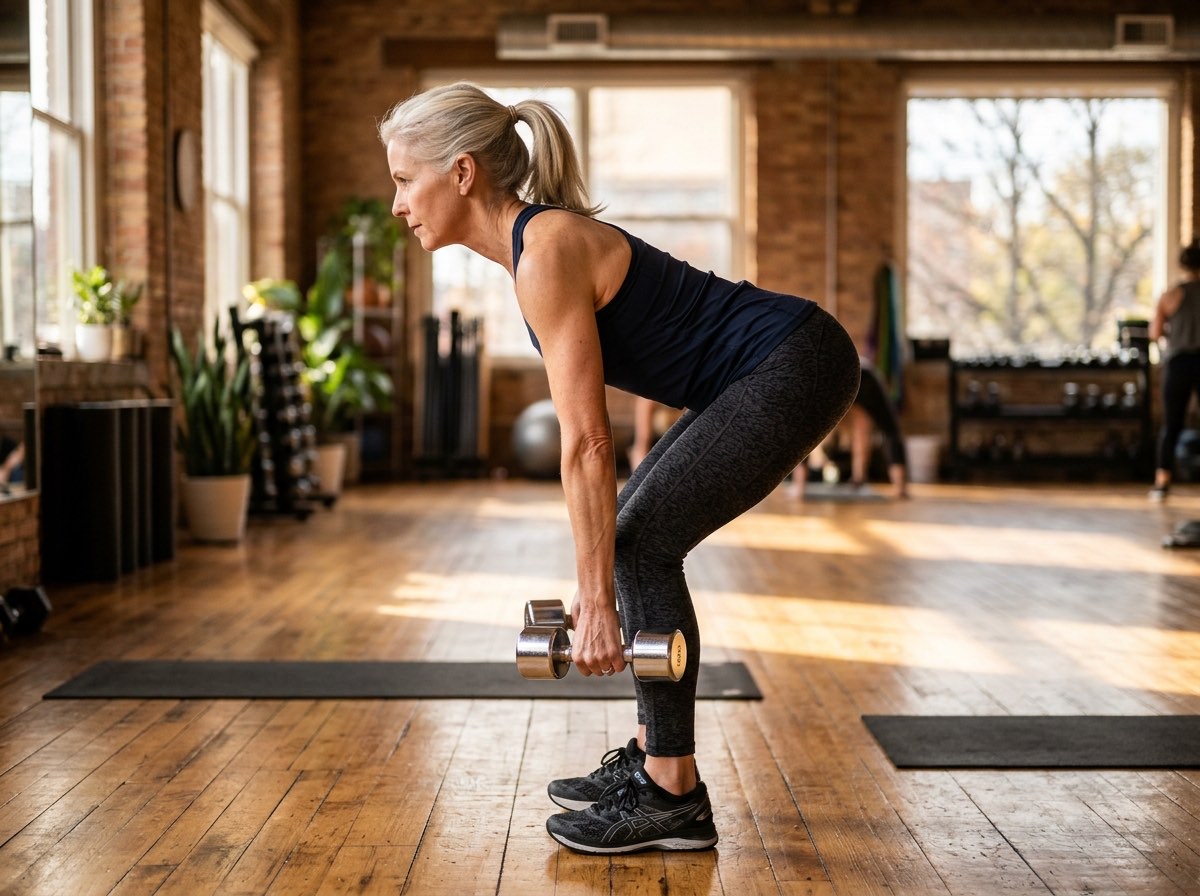
A sturdy chair, a wall, and some floor space cover every basic movement pattern. Our at-home guide turns them into complete workouts — no jumping, no burpees, no commute.
- A complete 25–30 minute home starter session
- Five ways to progress using nothing but tempo and leverage
- When a $15 resistance band is worth adding

Building Muscle After 40
Muscle stays trainable at every age studied — what changes is that consistency matters more than intensity. Progressive overload, protein, and recovery, explained without the supplement-shelf sales pitch.
- Progressive overload explained in plain language
- A practical weekly structure for muscle-focused training
- Protein anchors you can actually follow
Strength Training During Menopause
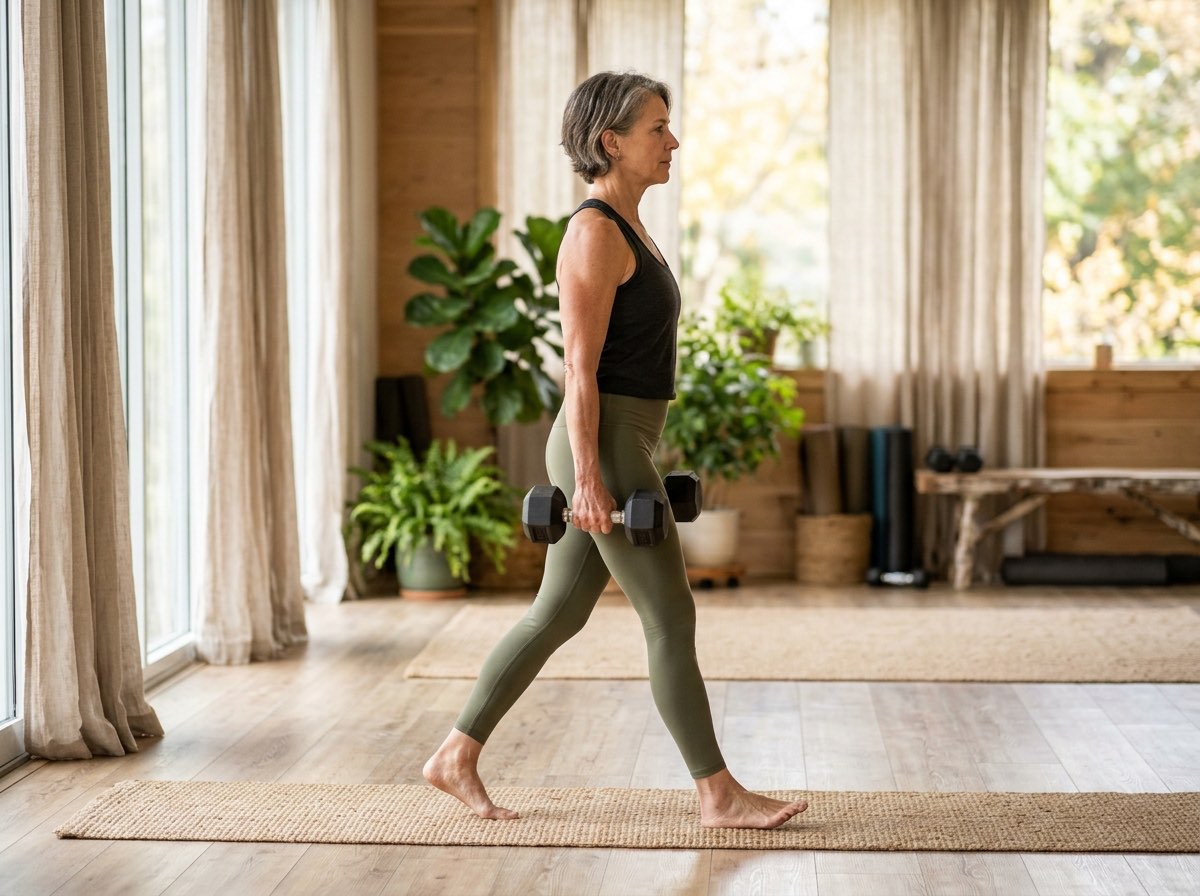
Falling estrogen changes the training context — faster bone loss, shifting body composition, more variable recovery. It also makes strength training more valuable, not less. Here's what the evidence supports, minus the hormone hype.
- What actually changes during perimenopause and menopause
- Which claims online are overstated (and why)
- A weekly structure sized for real recovery

Bone Health and Resistance Training
Bone responds to mechanical loading — and the hip and spine are the sites that matter most. What bone-density research (including the supervised LIFTMOR trial) actually shows, and how to train safely whether you're proactive or have a diagnosis.
- Osteopenia vs. osteoporosis, defined plainly
- What LIFTMOR found — and its honest limits
- When professional guidance matters most
Build Your Week in Two Minutes
Answer five quick questions — goal, experience, joints, equipment, schedule — and the AI Workout Planner builds a personalized weekly strength training plan you can view, print, and adjust. It's general fitness information, not a medical program.
Latest Fitness Guides
Longer, evidence-informed articles on strength, bone health, menopause fitness, and joint-friendly training.
Strength Training for Women Over 40: How to Build Muscle and Stay Strong
Strength training means working your muscles against resistance — dumbbells, bands, or your own bodyweight — so they gradually adapt and get stronger.
Strength Training During Perimenopause and Menopause: What Women Should Know
During perimenopause and after menopause, falling estrogen levels are associated with faster bone loss and changes in body composition.
Strength Training Over 40: Frequently Asked Questions
How often should women over 40 strength train?
Is it safe to start strength training at 50 or 60?
Do I need a gym membership?
Will lifting weights make me bulky?
Can strength training help with bone health?
How long before I see results?
About STRONGER 40+
STRONGER 40+ publishes practical strength training guidance for women in midlife. Our content is produced by the editorial team and written against public, verifiable sources — including guidance from the World Health Organization and NIH institutes — which we link where relevant.
Our editorial standards are simple and enforced: we don't invent experts, testimonials, or statistics; we don't promise medical outcomes; we distinguish clearly between what research supports, what general guidance suggests, and what varies person to person; and we update articles as the evidence we cite evolves. Where a topic needs individual medical judgment — osteoporosis, heart conditions, recent injuries — we say so plainly and recommend qualified professional guidance.
This content is general fitness information, not medical advice, diagnosis, or treatment. Exercise affects everyone differently, and public-health guidance is designed for generally healthy adults. If you have a medical condition (including osteoporosis, heart or blood-pressure conditions, a recent fracture or surgery, or joint replacements), are pregnant, or experience pain, dizziness, or chest discomfort during activity, talk to a qualified health professional before starting or changing a training program.